

April 6, 2026 · Window washing tips
Monsoon season in the East Valley runs roughly from mid-June through September. For most of the year, Arizona dust settles slowly onto your glass. During monsoon season, it arrives all at once — blown in by haboobs, mixed with moisture, and packed into every track, screen, and sill on your home. A little preparation before the season starts, and a proper cleanup after storms, makes a real difference in how your windows hold up.
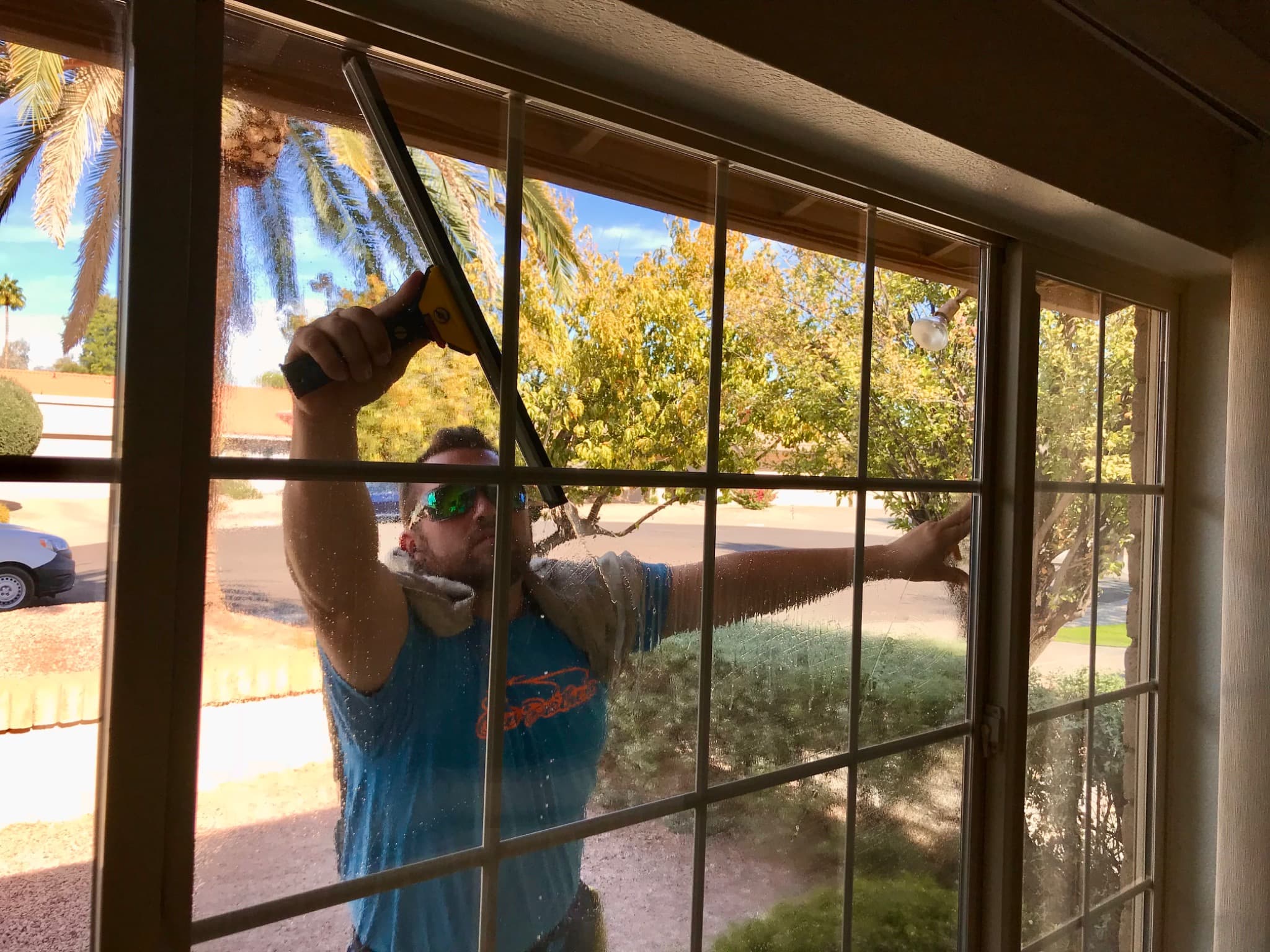
Before monsoon season: what to do in May and early June
The best time to prepare is before the first storm, not after. Here is what we recommend:
- Schedule a full window cleaning before the season starts. Clean glass and clear tracks going into monsoon season means post-storm cleanup is much faster — you are washing off one storm's worth of debris, not months of buildup underneath it. Learn more about our window cleaning approach for East Valley homes.
- Inspect your screens. Torn or bent screens let debris blow directly onto your glass and into your tracks. If your screens are damaged, get them repaired or replaced before the storms arrive. Screen cleaning also removes the fine dust that has built up over spring — dust that monsoon moisture will turn into muddy residue if left in place.
- Clear your window tracks. Packed debris in tracks can block drainage. When monsoon rain hits, water that cannot drain backs up and can work its way under the frame. A quick vacuum and wipe of every track takes a small amount of time and helps prevent bigger problems.
- Check your weatherstripping. Cracked or missing weatherstripping around window frames can let wind-driven rain and fine dust into the interior. This is worth a quick walk around your home before the season starts.
During a storm: leave the windows alone
This sounds obvious, but it comes up every season — do not try to clean windows during or immediately after a haboob while everything is still wet. Wiping dust-and-moisture off glass before it dries properly pushes grit across the surface and can leave fine scratches, especially on older glass. Let the storm pass, let things dry, then assess.
If you have solar panels, the same rule applies. Wet dust on panels is best left to dry before cleaning. Scrubbing wet, gritty residue can scratch the glass coating. Solar panel cleaning after a major storm is one of the most common service needs in July and August.
After a monsoon storm: the cleanup checklist
- Wait for everything to dry before wiping anything. In most cases, giving it a few hours after the storm passes is the safest move.
- Vacuum tracks first, then wipe with a lightly damp microfiber cloth. Trying to wipe muddy tracks without vacuuming first just smears the debris further in.
- Be careful with screens and glass. In Arizona, avoid spraying dusty windows or screens with regular hose water. The dust may rinse off, but the minerals in the water can quickly leave hard-water spots on the glass that are much harder to remove than the original dirt.
- Check for hard-water spotting on glass near irrigation lines or overspray zones. Monsoon moisture can bring old mineral residue back into view, even on windows that looked clean before the storm.
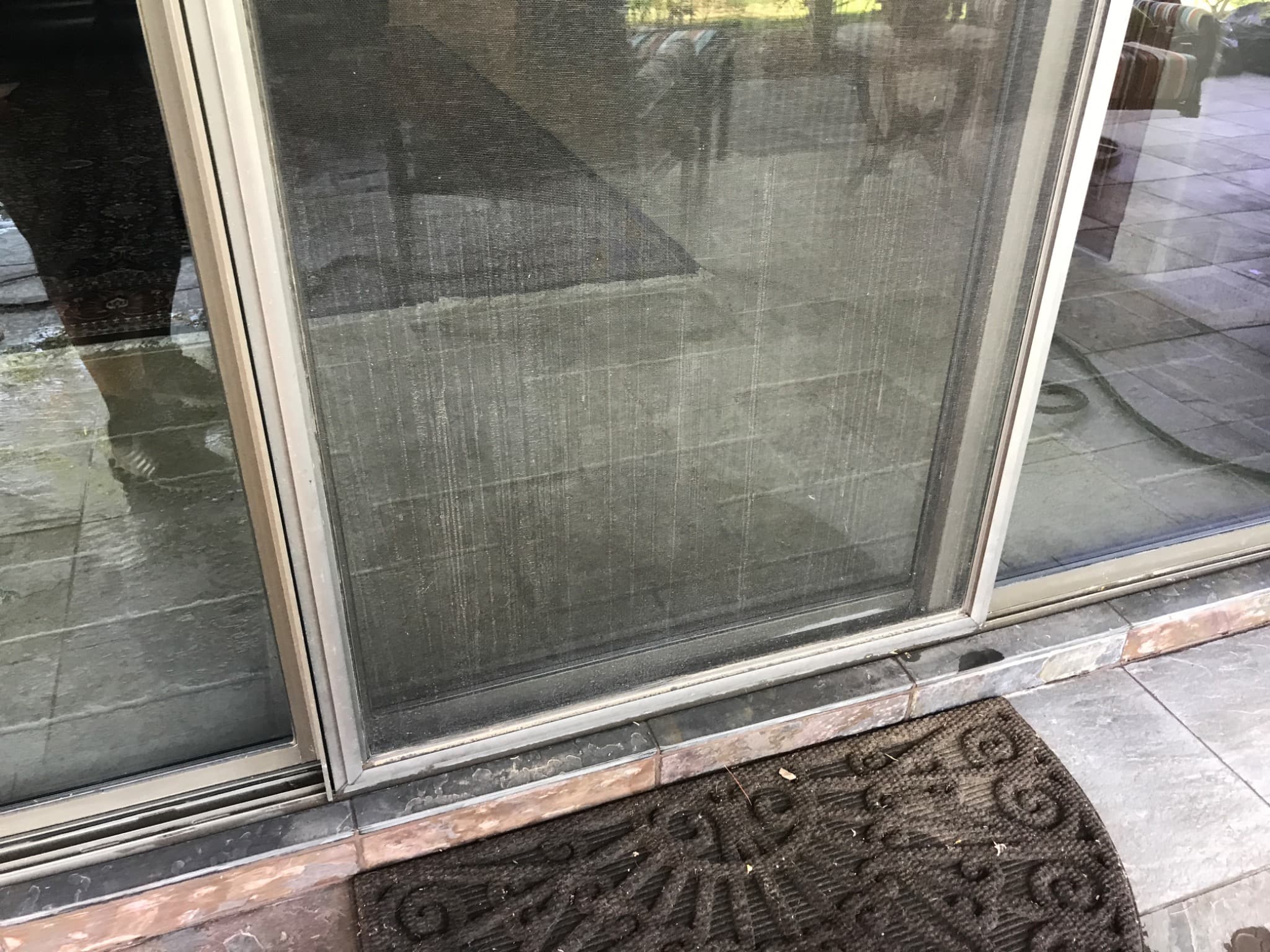
One of the biggest Arizona mistakes: using hose water on glass
Many homeowners assume that if their windows get dusty after a storm, they can just spray them off with a garden hose. In Arizona, that often creates a second problem. The minerals in regular tap water can leave hard-water spots on the glass, and those spots may begin showing up within a day as the water dries in the sun.
Those mineral deposits can be much harder to remove than the original storm dust. What looked like a quick fix can turn into permanent-looking spotting that requires professional restoration or specialized cleaning methods.
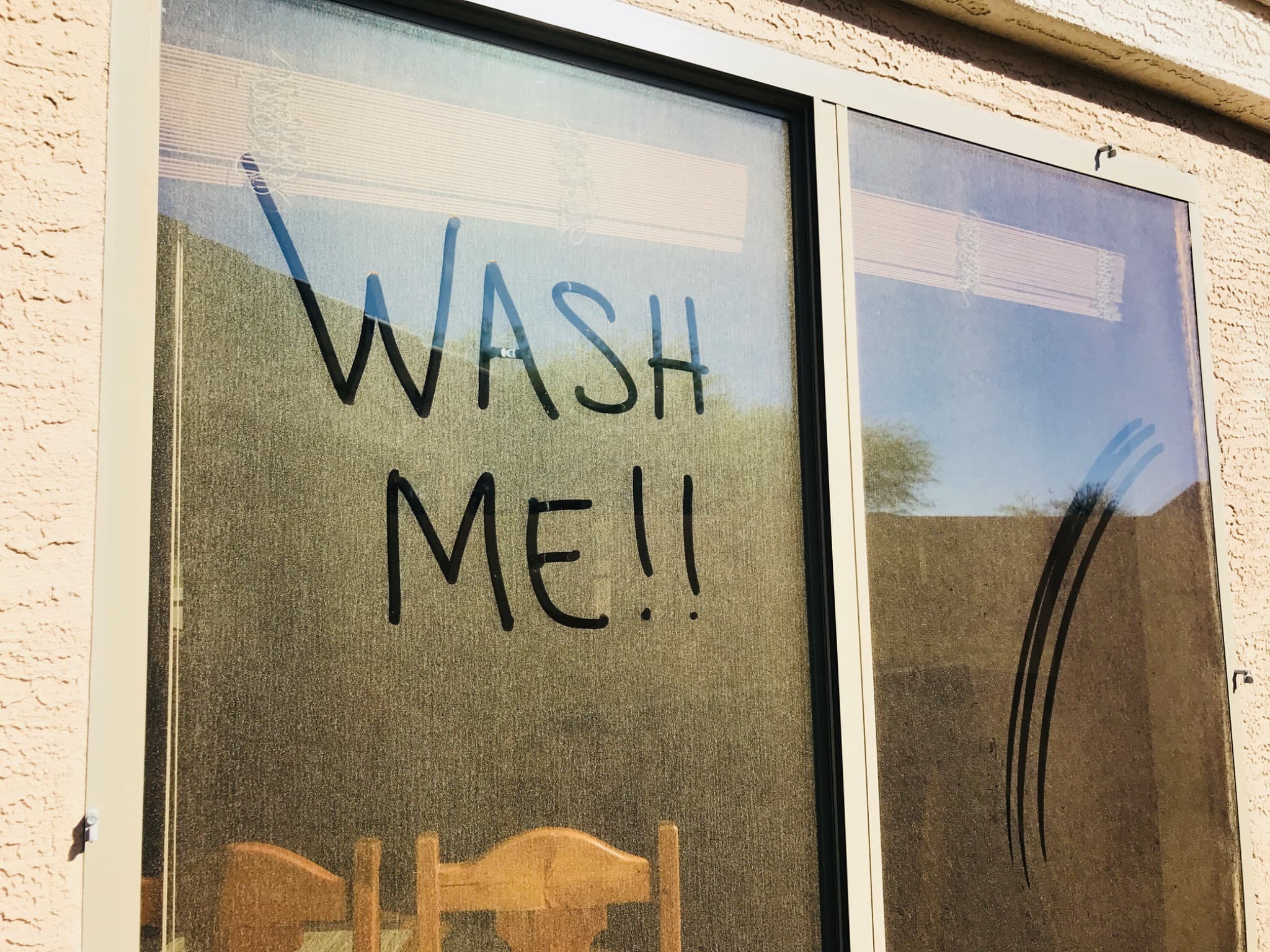
When to call a professional after monsoon season
After a bad haboob — or after a full monsoon season of repeated storms — the buildup in tracks, on screens, and on exterior glass gets to a point where professional equipment makes a real difference. One of the biggest mistakes Arizona homeowners make is spraying dusty glass with regular hose water, which can leave hard-water mineral spots that are difficult to remove.
We use deionized water and water-fed pole systems that rinse glass and frames without leaving new mineral deposits behind. That is especially important in the East Valley, where hard water is a real concern.
Most homeowners we work with schedule one cleaning before monsoon season and one after — typically in May or June, then again in October once the storms have wrapped up. That rhythm keeps glass looking its best year-round without over-servicing.
We serve Mesa, Gilbert, Chandler, Queen Creek, San Tan Valley, Apache Junction, Tempe, and the surrounding East Valley. If you want to get ahead of monsoon season, get an instant bid → or call (480) 626-8649 — Olsen Brothers Window Cleaning.
Get an instant bid → — online or by phone
Same-day scheduling when routes allow. East Valley focused for fast service.